




Hospital Assisted Surgical Robot Procedures Market Summary
The global hospital assisted surgical robot procedures market size was estimated at USD 11.07 billion in 2025 and is projected to reach USD 39.42 billion by 2033, growing at a CAGR of 17.3% from 2026 to 2033. The market is driven by the demand for minimally invasive surgeries, which reduce recovery time and complications while improving precision.
Key Market Trends & Insights
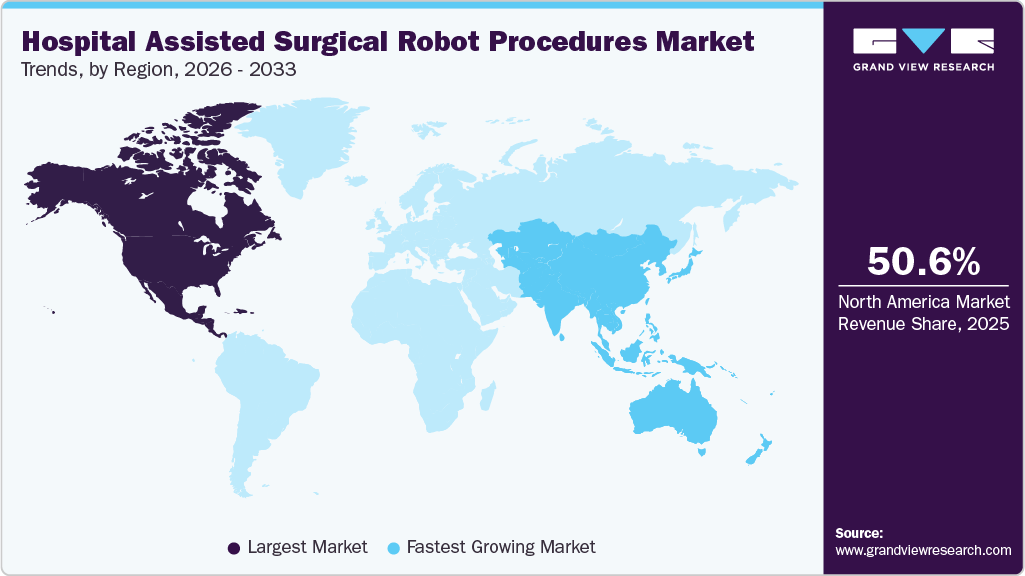
- North America hospital assisted surgical robot procedures market dominated the global market with the largest revenue share of 50.60% in 2025.
- U.S. hospital assisted surgical robot procedures market is anticipated to register the fastest growth rate during the forecast period.
- By application, the urology segment held the largest revenue share of 27.78% in 2025.
- By procedure type, the minimally invasive laparoscopic robotic-assisted segment held the largest revenue share in 2025.
- By procedure complexity, the medium complexity procedures segment held the largest revenue share in 2025.
Market Size & Forecast
- 2025 Market Size: USD 11.07 Billion
- 2033 Projected Market Size: USD 39.42 Billion
- CAGR (2026-2033): 17.3%
- North America: Largest market in 2025
- Asia Pacific: Fastest growing market
Adoption of advanced robotic technologies, rising investments in healthcare infrastructure, and the prevalence of complex surgical conditions are expanding the use of surgical robots. In January 2025, Warren Memorial Hospital in the U.S. began performing robotic-assisted general surgery using the da Vinci Xi system, enabling minimally invasive abdominal procedures with improved precision, reduced tissue damage, and faster patient recovery.
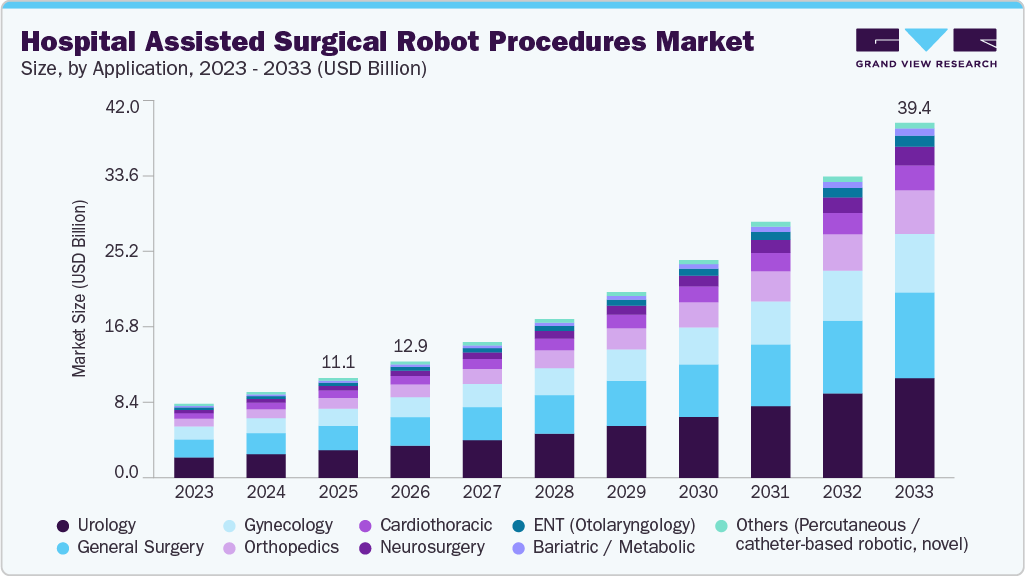
The market is driven by the rising demand for minimally invasive surgeries, which offer enhanced precision, reduced post-operative complications, and shorter patient recovery times. Robotic systems enable surgeons to perform complex procedures with greater accuracy and consistency, improving clinical outcomes and operational efficiency, thereby encouraging hospitals to integrate these technologies.In November 2025, Olean General Hospital in the U.S. announced plans to launch a robotic surgery program with the da Vinci Xi system in early 2026. The technology enables surgeons to perform procedures with precision, offering patients quicker recovery, less pain, and improved outcomes.
Integration of artificial intelligence, high-definition imaging, and multi-armed robotic systems allows healthcare providers to expand procedural capabilities, optimize workflow, and deliver higher-quality surgical care, particularly in tertiary and specialty hospitals. In February 2026, Nova Scotia Health’s QEII Health Sciences Centre introduced the da Vinci Xi robot with a USD 2.78 million donor contribution, enabling the province’s first robot-assisted colorectal, thoracic, and hepatobiliary surgeries. The system has already supported 56 procedures and expanded access to advanced care across multiple specialties.
Market growth is also propelled by the increasing availability of a skilled surgical workforce trained in robotic-assisted procedures, alongside favorable reimbursement frameworks and growing patient awareness of the benefits of robotic surgery. In February 2026, NHS East of England unveiled its National Cancer Plan, aiming to expand robot-assisted surgeries from 70,000 to 500,000 procedures by 2035 and to improve cancer care through faster diagnostics, specialist-centered treatment, and genomic testing. The plan includes same-day robotic prostatectomies and over 250 minimally invasive thoracic procedures, reducing hospital stays and enhancing recovery for patients across the region.
Case Study: Expanding the Role of Robotic Surgery in Emergency General Procedures (2013 to 2021)
Background
While robotic surgery (RS) is well established in elective cases, its use in emergency general surgery (EGS) has been more limited. Historically, open and laparoscopic techniques dominated urgent procedures due to logistical and training challenges. This study, published in JAMA Surgery in March 2024, evaluated trends and outcomes in RS adoption for four common EGS procedures across 829 US hospitals between 2013 and 2021.
Scope & Methodology
Over 1 million urgent and emergent cases were analyzed, including:
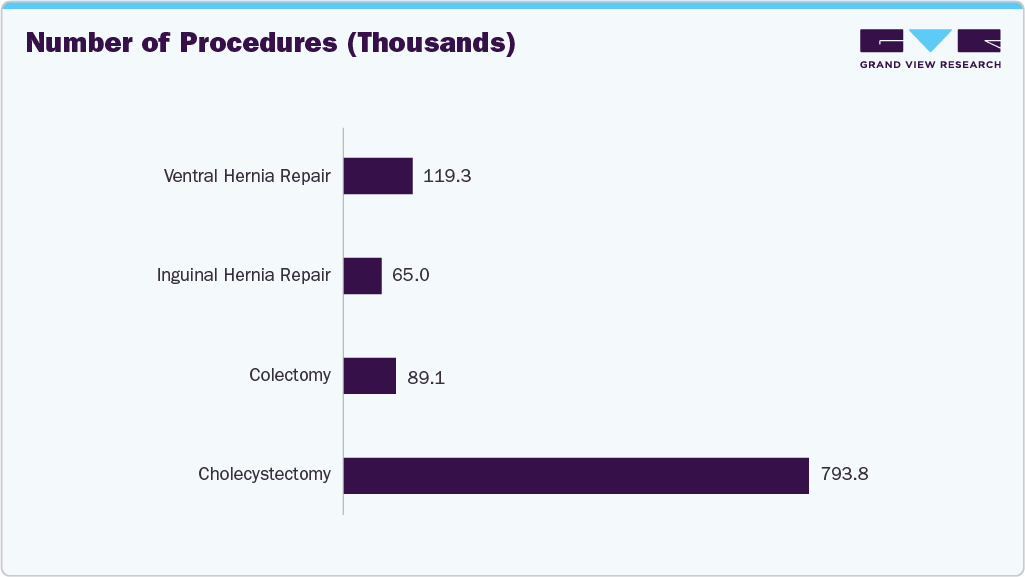
Using a large discharge database (PINC AI), the study tracked procedure types (open, laparoscopic, robotic), conversion to open, and length of stay (LOS). Propensity score matching controlled for patient, hospital, and surgeon variables.
Key Findings
-
Rising Adoption: Robotic surgery saw a steady annual increase in usage across all four procedures. Inguinal hernia repairs led the trend, growing from 0.4 percent to 15.3 percent over eight years.
-
Reduced Conversions: Compared to laparoscopy, RS consistently showed lower conversion rates to open surgery up to four times lower in some procedures (for example, 2.4 percent vs 10.7 percent in inguinal hernia repair).
- Shorter Hospital Stays: Robotic approaches were associated with modestly shorter postoperative LOS especially in colectomy and hernia repairs.
Implications
-
Clinical Outcomes: The data suggest RS may provide meaningful benefits in EGS mirroring its success in elective surgery with lower conversion rates and shorter recovery times.
-
Operational Considerations: Despite clinical advantages, widespread RS adoption in emergencies may be constrained by factors such as training gaps, OR access, and system level readiness.
- Trend Toward Minimally Invasive: The shift reflects broader trends in general surgery favoring precision, methods, even in time sensitive scenarios.
Conclusion
Robotic surgery, while still not the dominant approach in emergencies, is gaining traction across U.S. hospitals. Its performance in high volume urgent procedures signals a possible paradigm shift in acute surgical care, especially as robotic platforms become more accessible and integrated into EGS protocols.
Case Study: Emergence of Surgical Robotics in Africa (2003-2023)
Background
Robotic surgery has transformed surgical practice worldwide, but adoption in Africa has been limited due to infrastructure, cost, and training challenges. This 2024 study in the Journal of Minimally Invasive Surgery provides the first continent-wide scoping review and meta-analysis of robotic surgery, examining procedures, platforms, and outcomes in African healthcare systems.
Scope & Methodology
Researchers conducted a systematic search across PubMed, Google Scholar, Web of Science, and African Journals Online, identifying 1,266 articles. After screening, 16 studies from South Africa, Egypt, and Tunisia met the inclusion criteria. Together, they represented 1,328 robotic procedures across four surgical specialties – urological, general, gynecological, and cardiothoracic. Platforms included da Vinci (Intuitive Surgical), Versius (CMR Surgical), and Senhance (Asensus Surgical).
A meta-analysis in R software calculated pooled conversion, morbidity, and mortality rates with 95% confidence intervals.
Key Findings
-
Geographic Concentration: 82.9% of procedures were performed in South Africa, 16.3% in Egypt, and 0.8% in Tunisia.
-
Specialty Distribution: Urological surgery dominated (90.1%), with robotic prostatectomy most common (49.3% of all cases). General surgery accounted for 7.4%, gynecology 2.5%, cardiothoracic 0.1%.
-
Platform Use: da Vinci was the primary system (used in 68.8% of studies), with limited use of Versius and Senhance.
Outcomes:
-
Conversion to open surgery was rare – 0.2% pooled rate.
-
Morbidity prevalence was 21.2%, with complications such as ileus, urine leaks, and hemorrhage most frequent.
-
No mortality reported in reviewed cases.
-
Trend: Marked rise in reports and adoption after 2020.
Implications
-
Clinical Performance: Outcomes suggest robotic surgery, when implemented, is safe and effective in African contexts, aligning with global performance data.
-
Operational Challenges: Widespread adoption is hindered by high equipment costs, limited training programs, unreliable electricity in many hospitals, and infrastructure deficits.
-
Strategic Opportunities: Newer lower-cost robotics platforms and targeted training could accelerate adoption, especially in high-volume tertiary centers.
Conclusion
Robotic surgery in Africa remains limited but shows promise, with excellent safety, low conversion rates, and potential for broader impact. Concentrated currently in a few countries and specialties, expansion likely to require investment, policy support, and training infrastructure. These early results provide a strong foundation for scaling this technology to improve surgical outcomes across the continent.
Market Concentration & Characteristics
The hospital-assisted surgical robot procedures market exhibits a high degree of technological innovation, driven by the integration of artificial intelligence, augmented reality, and real-time analytics into surgical workflows. Robotic platforms are evolving toward enhanced automation, superior dexterity, and specialty-specific capabilities. In September 2025, MemorialCare expanded its robotic surgery program with the da Vinci 5 at three hospitals, enabling high-complexity minimally invasive procedures across surgeries.
Mergers and acquisitions activity is moderate, primarily focused on startups offering differentiated technologies such as soft-tissue, navigation software, and AI-enabled workflow optimization.In July 2025, Zimmer Biomet announced a definitive agreement to acquire Monogram Technologies for approximately USD 177 million, with potential contingent payments of up to USD 542 million through 2030. The acquisition likely to expand Zimmer Biomet’s orthopedic robotics portfolio by adding semi- and fully autonomous solutions to its ROSA platform and is expected to support revenue growth from 2027 onward.
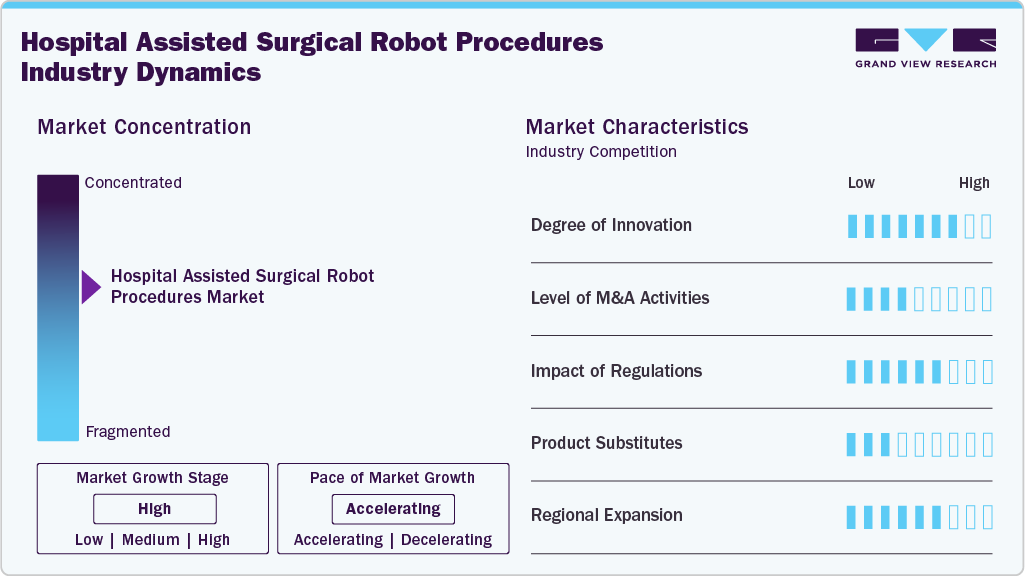
The regulatory landscape imposes stringent oversight, with rigorous device classification, safety protocols, and compliance standards for digital and software components. Approval pathways necessitate multi-phase clinical validation, post-market surveillance, and adherence to interoperability and cybersecurity requirements. Emerging frameworks for AI-enabled surgical systems further increase compliance complexity, requiring firms to carefully balance innovation with risk mitigation and documentation.
Service expansion is moderate, as vendors increasingly provide value-added solutions such as cloud-based analytics, predictive maintenance, virtual training simulators, and procedure optimization tools. These offerings enhance operational efficiency, optimize procedural outcomes, and support adoption in smaller hospitals and regional networks.
Regional expansion is significant, with companies actively targeting underserved markets across Asia-Pacific, the Middle East, and Latin America. Approaches include localized training programs, regulatory partnerships, and in-market support networks to facilitate adoption, reduce barriers to entry, and accelerate the global penetration. For instance, in October 2025, Kingston Health Sciences Centre (KHSC) expanded its robotic surgery program by adding a second Da Vinci XI surgical robot, doubling procedure capacity.
Application Insights
The urology segment dominated the market with the largest revenue share of 27.78% in 2025. This dominance is attributed to the widespread adoption particularly prostatectomies, which provide superior surgical precision, shorter post-operative recovery times, and improved clinical outcomes. In March 2025, Surrey Memorial Hospital in Canada launched a campaign to fund a da Vinci surgical robot, aiming to enhance precision and reduce recovery times for patients.
The orthopedics segment is anticipated to grow at the fastest CAGR over the forecast period, driven by increasing demand for joint replacement surgeries and growing technological advancements. The rising prevalence of musculoskeletal disorders and aging populations is further contributing to the market expansion in this specialty. For instance, in May 2024, HKU’s Li Ka Shing Faculty of Medicine in Hong Kong introduced robot-assisted spine surgery, performing 20 procedures since October 2023. The technology improves surgical precision, reduces risks, and supports faster recovery for patients with complex spinal conditions.
Procedure Type Insights
The minimally invasive laparoscopic robotic-assisted segment dominated the market with the largest revenue share of 60.70% in 2025. This is attributed to its broad clinical applicability across general surgery, urology, and gynecology. Its ability to reduce surgical morbidity, improve procedural efficiency, and enhance patient outcomes has made it the preferred modality across diverse healthcare settings. In February 2026, Medical City hospitals in Fort Worth and Arlington, U.S., expanded their robotic-assisted surgery programs with the da Vinci 5 and Mako systems.
The endoscopic robotic segment is anticipated to grow at the fastest CAGR over the forecast period. This growth is fueled by increasing adoption in interventional cardiology and vascular procedures, where precision and minimally invasive access are critical. Advancements in catheter navigation, imaging integration, and remote operation capabilities are further driving demand for these systems. In December 2024, CUHK performed the world’s first robotic-assisted en bloc resection of a bladder tumor using a locally developed endoscopic surgical robotic system, completing eight clinical trials with promising outcomes.
Procedure Complexity Insights
The medium-complexity procedures segment dominated the market with a revenue share of 62.79% in 2025. This is attributed to the increasing adoption of systems in urologic, gynecologic, and colorectal surgeries. These procedures balance clinical demand, reimbursement feasibility, and surgeon preference for precision and minimally invasive techniques. In October 2024, Hong Kong Adventist Hospital introduced a robotic-assisted surgical system for spine and knee procedures. The system enhances precision in bone and soft tissue surgery, reduces operative time, and may improve outcomes for complex cases such as degenerative arthritis and spinal conditions.
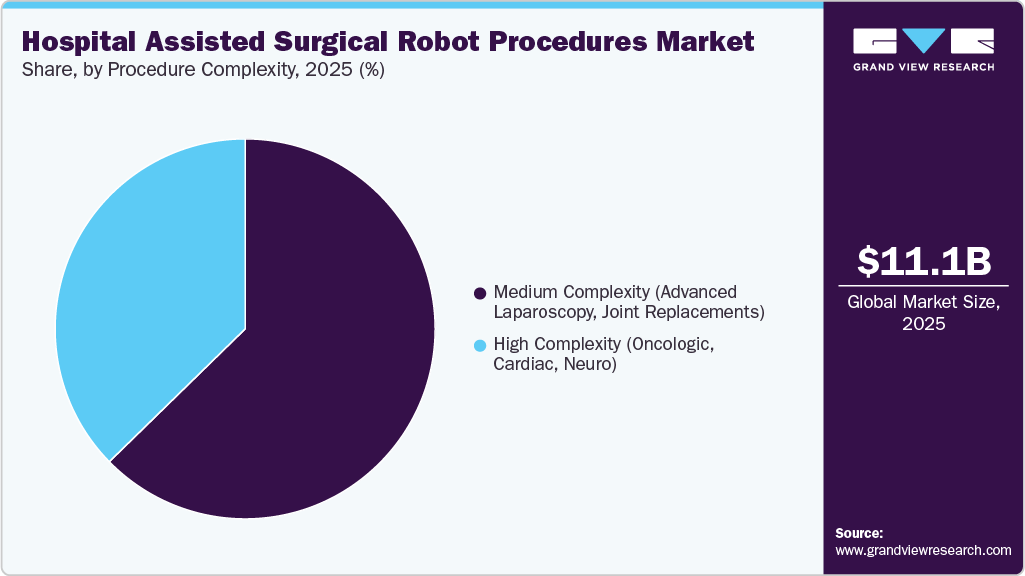
The high complexity segment is anticipated to grow at a significant CAGR over the forecast period. This growth is driven by the increasing transition of intricate laparoscopic surgeries to robotic-assisted platforms and the growing expertise of surgeons in these systems. Adoption is expanding beyond tertiary centers into community hospitals and ambulatory surgical facilities, driven by the ability of platforms to enhance precision, reduce operative duration, and support faster patient recovery. In December 2025, USA Health in the U.S. launched a robotic thoracic surgery program at University Hospital and Providence Hospital, enabling minimally invasive lung and chest cancer procedures with reduced trauma and faster recovery. The program leverages the da Vinci Xi system to improve surgical precision and patient outcomes.
Regional Insights
North America hospital assisted surgical robot procedures marketdominated the respective global market with a revenue share of 50.60% in 2025, attributed to high procedural volumes in urology and general surgery, robust hospital infrastructure, and supportive reimbursement frameworks. In November 2025, Pasqua Hospital expanded Saskatchewan’s robotic-assisted surgery program with the da Vinci Surgical System. The system allows surgeons to perform minimally invasive procedures with greater precision, providing patients faster recovery, less pain, minimal scarring, and shorter hospital stays.
U.S. Hospital Assisted Surgical Robot Procedures Market Trends
The U.S. dominated the hospital assisted surgical robot procedures market in North America region in 2025, driven by the early and widespread adoption across surgical specialties. Continuous innovation and a competitive supplier landscape are accelerating the introduction of advanced platforms, reducing costs, and expanding access to minimally invasive robotic procedures.In October 2025, Wythe County Community Hospital in the U.S. introduced a new surgical robot, marking the launch of its robotic surgery program for joint replacement procedures.
Europe Hospital Assisted Surgical Robot Procedures Market Trends
The hospital assisted surgical robot procedures market in Europe is expected to grow significantly over the forecast period, driven by healthcare systems prioritizing minimally invasive solutions to improve outcomes and reduce recovery times. In April 2025, HUS reported completing 10,000 robot-assisted surgeries across multiple specialties, with over 6,000 in urology since 2009, highlighting faster recovery, less-invasive procedures, and expanded surgical possibilities. Prostate, kidney, bladder, hernia, thoracic, gynecologic, pediatric, and ENT surgeries have increasingly adopted robotic techniques, improving precision and patient outcomes.
The hospital assisted surgical robot procedures industry in the UK is expected to grow significantly during the forecast period,supported by initiatives to expand access to robotic systems across high-demand regions and specialties such as oncologic urology and colorectal surgery. In June 2025, Cornerstone Robotics launched the first clinical evaluation of its Hong Kong-developed Sentire Endoscopic Surgical System at Portsmouth Hospitals University NHS Trust in the UK.
Asia Pacific Hospital Assisted Surgical Robot Procedures Market Trends
Hospital assisted surgical robot procedures industry in APAC is expected to register the fastest growth rate over the forecast period. Increasing surgical volumes, a rising demand for precision, and modernization of hospital infrastructure are fueling this expansion. The growth of robotic platforms in emerging medical tourism hubs, coupled with investments in training programs, is accelerating market uptake. In September 2025, HMI Medical launched Malaysia’s first Japanese hinotori robotic-assisted surgical systems at Mahkota Medical Centre and Regency Specialist Hospital, performing over 11,000 procedures across urology, gynaecology, colorectal, and general surgery.
China hospital assisted surgical robot procedures market is anticipated to register considerable growth during the forecast period. This is driven by policy support for innovation, localization of manufacturing, and adoption of robotic systems in major hospitals for complex procedures. In March 2025, the Asian Journal of Urology reported that by December 2024, China had conducted over 580,000 robot-assisted surgeries, with urological procedures accounting for 48% and more than 400 robotic platforms installed nationwide. The da Vinci system represented over 90% of installations, though adoption varied across provinces, highlighting high demand and regional disparities.
Latin America Hospital Assisted Surgical Robot Procedures Market Trends
Hospital assisted surgical robot procedures industry in Latin America is anticipated to witness considerable growth over the forecast period. This is attributed to private healthcare providers adopting robotic platforms to enhance service differentiation. Regional training initiatives and international collaborations are building surgical expertise, enabling broader adoption across diverse specialties.In September 2025, Levita Magnetics performed the world’s first AI-guided autonomous gallbladder surgery at Clínica Las Condes in Santiago, Chile, using its MARS platform, demonstrating enhanced precision, efficiency, and workflow in high-volume minimally invasive procedures.
Brazil hospital assisted surgical robot procedures industry is anticipated to register considerable growth during the forecast period with private hospital investments in robotic platforms and programs to improve surgeon proficiency driving market growth. Increased access to advanced minimally invasive systems is further supporting revenue gains.In May 2023, MicroPort MedBot’s Honghu Orthopedic Surgical Robot (SkyWalker) received marketing approval from Brazil’s ANVISA, allowing local hospitals and surgeons to access advanced robot-assisted joint replacement procedures and expanding the company’s presence in the Brazilian market.
Middle East & Africa Hospital Assisted Surgical Robot Procedures Market Trends
Hospital assisted surgical robot procedures market in MEA is anticipated to witness considerable growth over the forecast period with tertiary hospitals scaling up robotic surgery programs and governments promoting digital and surgical innovation. In August 2025, Johns Hopkins Aramco Healthcare (JHAH) in Dhahran, Saudi Arabia, reported that its da Vinci surgical robot had performed over 600 procedures since 2024, becoming the busiest system in the country and advancing robotic surgery expertise across the Middle East.
UAE hospital assisted surgical robot procedures industry is anticipated to register considerable growth during the forecast period as flagship hospitals deploy robotic systems to elevate surgical capabilities and assert regional leadership in minimally invasive procedures. In February 2026, American Hospital Dubai signed an agreement with Al Naghi Medical to acquire the da Vinci 5 robotic surgical system from Intuitive, strengthening its leadership in robotic-assisted surgery in the UAE.
Key Hospital Assisted Surgical Robot Procedures Company Insights
Key participants in the hospital assisted surgical robot procedures industry are focusing on devising innovative business growth strategies, such as expanding their product portfolios, partnerships and collaborations, mergers and acquisitions, and expanding their business footprints.
Key Hospital Assisted Surgical Robot Procedures Companies:
The following key companies have been profiled for this study on the hospital assisted surgical robot procedures market
- Intuitive Surgical
- THINK Surgical, Inc.
- Smith+Nephew
- Medtronic
- Stryker
- Zimmer Biomet
- CMR Surgical
- Asensus Surgical US, Inc.
- Renishaw PLC.
- MOON Surgical
Recent Developments
-
In February 2026, Lions Gate Hospital in North Vancouver introduced the da Vinci Xi Robotic Surgical System for minimally invasive procedures including prostate, bowel, rectal, kidney, hysterectomy, and complex hernia surgeries. Since January, 13 procedures have been completed, providing patients faster recovery, less pain, and supporting surgeon training and recruitment.
-
In February 2026, Nova Scotia Health’s QEII Health Sciences Centre introduced a new da Vinci Xi robotic surgical system, marking the hospital’s second da Vinci and seventh surgical robot overall. The system enabled the province’s first robot-assisted colorectal, thoracic, and hepatobiliary surgeries and expanded access for gynecologic and ENT cancer procedures, with over 56 surgeries completed since launch.
-
In July 2025, The Chinese University of Hong Kong successfully conducted an intercontinental telesurgery using its self-developed tele-robotic laparoscopic platform, connecting surgical teams across Hong Kong, Shanghai, and London. The procedure validated the technical feasibility and safety of complex remote surgeries and highlighted the potential for cross-border collaboration and medical education in robotic surgery.
Hospital Assisted Surgical Robot Procedures Market Report Scope
|
Report Attribute
|
Details
|
|
Market size value in 2026
|
USD 12.90 billion
|
|
Revenue forecast in 2033
|
USD 39.42 billion
|
|
Growth rate
|
CAGR of 17.3% from 2026 to 2033
|
|
Actual data
|
2021 – 2025
|
|
Forecast data
|
2026 – 2033
|
|
Quantitative units
|
Revenue in USD million/billion, and CAGR from 2026 to 2033
|
|
Report coverage
|
Revenue forecast, company ranking, competitive landscape, growth factors, and trends
|
|
Segments covered
|
Application, procedure type, procedure complexity, region
|
|
Regional scope
|
North America; Europe; Asia Pacific; Latin America; MEA
|
|
Country scope
|
U.S.; Canada; Mexico; UK; Germany; France; Italy; Spain; Denmark; Sweden; Norway; China; Japan; India; Australia; South Korea; Thailand; Brazil; Argentina; South Africa; Saudi Arabia; UAE; Kuwait
|
|
Key companies profiled
|
Intuitive Surgical; THINK Surgical Inc.; Smith+Nephew; Medtronic; Stryker; Zimmer Biomet; CMR Surgical; Asensus Surgical US, Inc.; Renishaw PLC.; MOON Surgical
|
|
Customization scope
|
Free report customization (equivalent up to 8 analysts working days) with purchase. Addition or alteration to country, regional & segment scope.
|
|
Pricing and purchase options
|
Avail customized purchase options to meet your exact research needs. Explore purchase options
|
Global Hospital Assisted Surgical Robot Procedures Market Report Segmentation
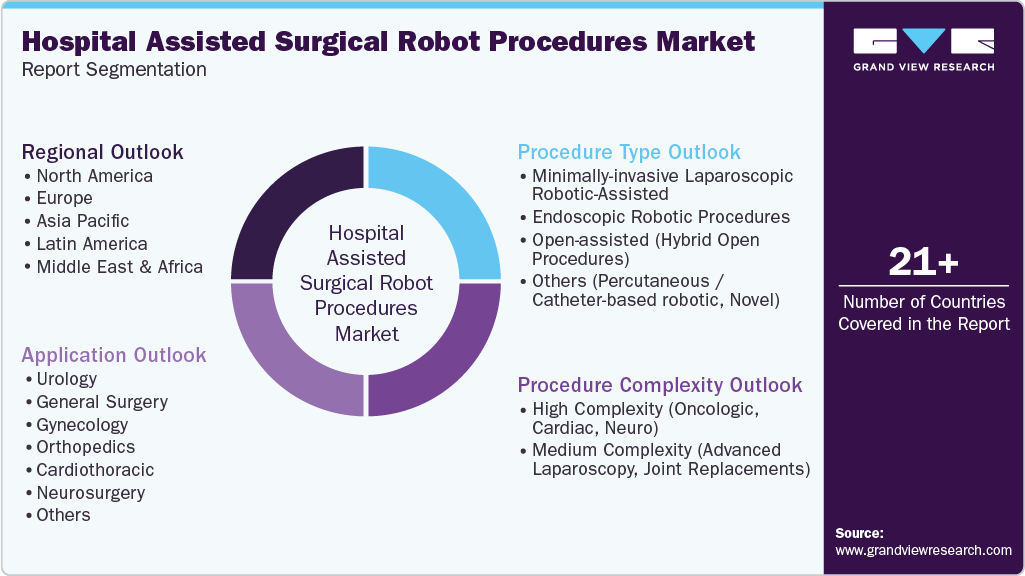
This report forecasts revenue growth and provides at global, regional, and country levels an analysis of the latest trends in each of the sub-segments from 2021 to 2033. For this report, Grand View Research has segmented the global hospital assisted surgical robot procedures market report based on application, procedure type, procedure complexity, and region:
-
Application Outlook (Revenue USD Million, 2021 – 2033)
-
Urology
-
General Surgery
-
Gynecology
-
Orthopedics
-
Cardiothoracic
-
Neurosurgery
-
ENT (Otolaryngology)
-
Bariatric / Metabolic
-
Other specialties
-
-
Procedure Type Outlook (Revenue USD Million, 2021 – 2033)
-
Minimally-invasive laparoscopic robotic-assisted
-
Endoscopic robotic procedures
-
Open-assisted (hybrid open procedures)
-
Others (Percutaneous / catheter-based robotic, novel)
-
-
Procedure Complexity Outlook (Revenue USD Million, 2021 – 2033)
-
High complexity (oncologic, cardiac, neuro)
-
Medium complexity (advanced laparoscopy, joint replacements)
-
-
Regional Outlook (Revenue, USD Million, 2021 – 2033)
-
North America
-
Europe
-
UK
-
Germany
-
France
-
Italy
-
Spain
-
Denmark
-
Sweden
-
Norway
-
-
Asia Pacific
-
Japan
-
China
-
India
-
Australia
-
South Korea
-
Thailand
-
-
Latin America
-
Middle East & Africa
-
South Africa
-
Saudi Arabia
-
UAE
-
Kuwait
-
-
Frequently Asked Questions About This Report
b. The urology segment dominated the market with the largest revenue share of 27.78% in 2025. This dominance is attributed to the widespread adoption particularly prostatectomies, which provide superior surgical precision, shorter post-operative recovery times, and improved clinical outcomes.
b. Some of the key players operating in the market include Intuitive Surgical, THINK Surgical, Inc., Smith+Nephew, Medtronic, Stryker, Zimmer Biomet, CMR Surgical, Asensus Surgical US, Inc., Renishaw PLC., and MOON Surgical.
b. The market is driven by the demand for minimally invasive surgeries, which reduce recovery time and complications while improving precision. Adoption of advanced robotic technologies, rising investments in healthcare infrastructure, and the prevalence of complex surgical conditions are expanding the use of surgical robots.
b. The global hospital asssisted surgical robot procedures market is projected to grow at a compound annual growth rate (CAGR) of 17.31% from 2026 to 2033 to reach USD 39.42 billion by 2033.
b. The global hospital asssisted surgical robot procedures market size was estimated at USD 11.07 billion in 2025 and is expected to reach USD 12.90 billion in 2026.
link
More Stories
Median Arcuate Ligament Syndrome | Orlando surgeon explains signs, symptoms and treatment
Gyder Surgical announces first commercial surgical cases in the United States performed by Dr. Paul M. Lombardi, M.D., at the Tri-County Orthopedics’ Joint Replacement Institute outpatient center
Bunion Surgery Market Get Facts About Business Strategies 2026 to 2031: Medi-tech Insights