


The 39th Ordinary Session of the Assembly of the African Union, held in Addis Ababa from 13 to 15 February 2026, brought together African Heads of State and Government for two days of high-level deliberations that placed the health and future of Africa’s people at the centre of the continental agenda. Against a backdrop of tightening fiscal space, declining development assistance, and growing calls for African health sovereignty, the Summit reflected a collective determination to strengthen domestic systems, reduce external dependency, and protect the health of women, children, and adolescents.
Health sovereignty was one of the defining themes of the Summit. In a landmark appointment, the African Union officially designated H.E. President Samia Suluhu Hassan of Tanzania as the AU Champion for Reproductive, Maternal and Child Health, a crucial step toward advancing maternal, newborn and child survival, as well as protecting sexual and reproductive health and rights (SRHR) in Africa.
In her role, President Samia will spearhead efforts to strengthen collaboration and joint action among AU Member States to improve reproductive health, as well as maternal and child health across Africa. The appointment signals a significant continental commitment to translating political will into measurable health outcomes.
Reflecting on her endorsement on the sideline of the Summit, President Samia highlighted Tanzania’s own journey, noting that maternal deaths in her country reduced significantly, from 556 deaths per 100,000 live births in 2015/16 to 104 in 2023/24, driven by domestic financing, partnerships with faith-based organisations and the private sector, and innovations such as the m-mama program, a mobile-enabled, emergency transportation system that reduces maternal and newborn mortality by connecting expectant mothers in rural areas to hospitals. “When a mother goes into labour,” she said, “she wants to come out holding her baby, celebrating life.” Her vision, that Africa can and must scale successful national models continent-wide, resonated deeply across the Summit.
“President Samia is now the AU Champion for maternal, child health, and SRH. This is a major milestone. She will catalyze and mobilize domestic resources for mother, child and adolescent health. She will be leading the scorecard that will be presented every year at the AU Assembly” — H.E. Dr. Jean Kaseya, Director General of Africa CDC.
Alongside this appointment, the Summit saw strong convergence around the need for African health security and self-reliance. Leaders from Nigeria, Kenya and Africa CDC called on African governments to rethink the continent’s approach to health, reducing dependence on foreign aid and fragile global supply chains and building strong, local systems capable of protecting people during crises. Member States also set a continental target of two million community health workers by 2030 to strengthen primary health care, universal health coverage, and pandemic preparedness.
It was within this broader Summit environment, one defined by urgency and a clear call for African leadership, that the Global Leaders Network for Women’s, Children’s and Adolescents’ Health (GLN), in partnership with the Partnership for Maternal, Newborn and Child Health (PMNCH), convened a high-level ministerial roundtable on the margins of the Summit titled “Investing in Africa’s Future: A Ministerial and Partner Conversation on Women’s, Children’s and Adolescents’ Health,” the roundtable brought together African health ministers and global partners to take stock of progress, confront shared challenges, and identify pathways forward for maternal, newborn, child, and adolescent health across the continent.
.jpeg?sfvrsn=c45e0ce6_1 "WhatsApp Image 2026-02-15 at 01.19.59 (1)")

From left to right: Dr Ouma Oluga, Principal Secretary, State Department of Medical Services, Ministry of Health, Kenya; H.E. Dr Jean Kaseya, Director General, Africa CDC; H.E. Dr Mekdes Daba, Minister of Health, Ethiopia; and Dr Francis Kasolo, WHO AU Liaison Office and WHO Representative to Ethiopia.
The stakes could not be higher. Sub-Saharan Africa accounts for approximately 70% of global maternal deaths and nearly 58% of global under-five deaths and almost half of all newborn deaths occur on the continent, with almost half of these deaths occurring in the neonatal period. Participants reaffirmed that political alignment, cross-sector engagement, and accountability mechanisms are essential to accelerating progress toward the 2030 Sustainable Development Goals.
“These figures remind us that this is not an abstract debate. It’s about survival, it’s about dignity, and Africa’s democratic dividend.” — Hon Dr. Aaron Motsoaledi, Minister of Health, Republic of South Africa.
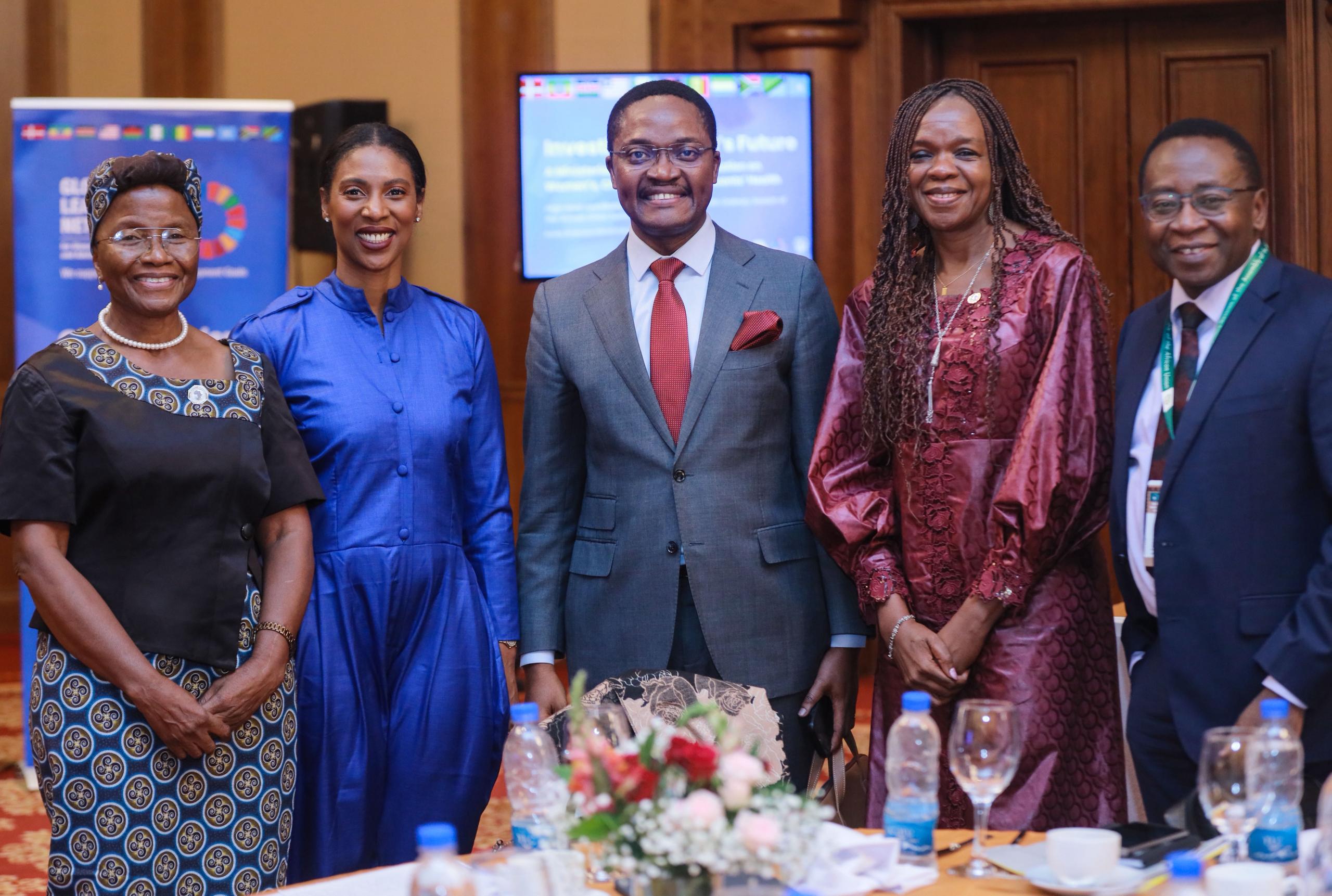

From left to right: Joy Phumaphi, Executive Secretary, ALMA; Kadi Touré, Communications Team Lead, PMNCH; Dr. Landry Dongmo Tsague, Director of Primary Health Care, Africa CDC; Alison Parker, Deputy Regional Director, UNICEF.
The roundtable’s discussions, together with the broader Summit commitments on health sovereignty and domestic financing highlighted the importance of coordinated action at national, regional, and continental levels to safeguard and expand essential health services for women, children, and adolescents. With the appointment of President Samia as AU Champion lending renewed political momentum to this agenda, and with African leaders increasingly aligned on the need for health sovereignty and self-reliance, the conditions for meaningful, lasting progress are within reach.
“The time to act is now. We cannot continue as usual, not only taking the stage and making statements, but bringing bold actions that we can share among each other.” — Hon Dr. Mekdes Daba, Minister of Health, Federal Democratic Republic of Ethiopia.
link